Piering / piling is generally required where near-surface soils are not suitable to support structural loads or susceptible to unsatisfactory levels of surface movement. These types of foundation solutions are commonly used across Queensland and NSW residential projects.
Common scenarios include:
Each site soil investigation is different, and the correct pier / pile solution should always be determined at time of the foundation design. This is achieved through a site-specific engineered design solution taking into consideration all identified soil conditions and the structure design requirements.
At STA Consulting Engineers, we design piering and foundation solutions to suit site-specific conditions, ensuring structures are supported by appropriate founding material and long-term serviceability of the structure.
This blog outlines the three most common types of piering used in residential construction; bored piers, bulk piers and screw piles, and when each is typically specified.
Bored Piers
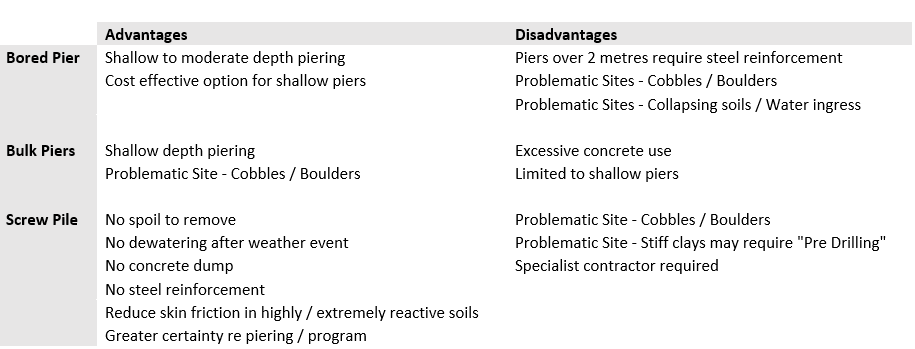
Cast in place concrete cylindrical support element, machine-drilled hole constructed to a specific diameter and depth. Reinforcement may be required due to depth or other identified issues.
Bulk Pier
Cast in place concrete load support element excavated using a machine bucket or similar. Bulk piers typically are used where shallow piers are required due to nominated shallow founding strata or as a result of the sites consisting of cobbles / boulders being present.
Screw Pile
Structural member that is screwed into the soil strata such as to transfer loads to the underlying nominated soil or rock strata and provide an adequate structural foundation at depth. Screw piles are preferred where deep piers are nominated or collapsing soils have been identified.
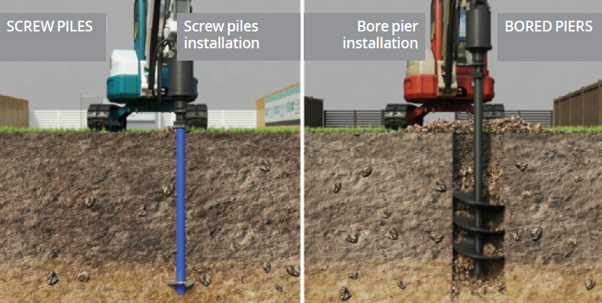
For a side-by-side comparison of bored and screw pier installation, watch the video below:
At STA Consulting Engineers, we provide practical, site-specific foundation solutions across Queensland and NSW, helping builders deliver projects efficiently and compliantly. If you’d like to discuss foundation solutions for your next project, get in touch with our team.